

On Change
A NeverTrumper’s turning point

On September 10, I was silently praying that no big news stories would break—a pretty tall order in 2025. That afternoon, for reasons unknown, Pickles, the 5-month-old puppy we had adopted four days earlier, seemed to have the idea that she was auditioning for “Marley & Me 3.” An unexpected news development would really throw a wrench into my tightly packed schedule, strained as it was by the added burden of an adorable but uncooperative pup.

At 2:52 pm, a shocking notification lit up my phone, and I knew my prayer had gone unanswered: Charlie Kirk had been shot. To be clear, I was no fan of Kirk, to put it mildly. But I’m not the type to speak ill of the dead, nor am I keen on incurring federal charges, so I’ll leave it at that. Nevertheless, like most Americans, I was horrified by the news. A friend forwarded me the now infamous video of the shooting, and my stomach turned. While cable news hosts were reporting that he was still alive, it looked to my untrained eyes that it would take a miracle for him to survive. Even if he somehow pulled through, I knew it was going to be a huge story, and rightfully so. Kirk had a significant following among young people on the political right.
The reaction to his death, however, was way beyond what I had expected. Kirk was almost immediately declared a “martyr” by the MAGA right in a sort of holy war that half the country seems determined to fight. In a nation where about 327 people are shot every single day—a fact Kirk himself understood to be an unfortunate side effect of the Second Amendment that was ultimately “worth it”—this particular shooting rapidly galvanized and united the right against “them.” Not the lone shooter, but anyone who had the nerve to criticize Charlie Kirk. Or Donald Trump. Or all things MAGA. Having complete control of the government isn’t enough, apparently. Trump and Co. want to control what you believe, think, and say too.
For me, the whole spectacle served as the latest reminder of how much things have changed on the Republican side of the fence. I’ve always said I didn’t leave the GOP, it left me. And that’s true. But I came close to heading down the other path once, a long time ago.
The GenX Way
If a popular left-wing personality met the same awful fate as Charlie Kirk, I am fairly confident that Republican officeholders would not be as uniformly gracious as Democrats were in the wake of Kirk’s murder. One need only look at the response to other recent incidents of political violence for evidence of that. But I have no doubt that if such a tragedy did occur, everything on social media would be in reverse. Some MAGA trolls would be joking and celebrating, and the left would be appalled. I wasn’t alive yet to witness it myself, but the same dichotomy occurred when Martin Luther King, Jr., was assassinated, albeit not on social networks. Some things, sadly, never change.
I’m not defending this behavior, mind you, just contextualizing it. After years of getting death and rape threats from far-right randos and bots on social media, nothing surprises me much anymore. I’m also a jaded old GenXer, and that makes a difference, too. In the 1980s, we said whatever we felt—the more brutal, the better—and we grew up at a time when everything was fair game for jokes.
Case in point: When I was 11 years old, a local Philadelphia weatherman died tragically in a skydiving accident. “Weatherman” doesn’t fully capture Jim O’Brien. It’s too small a word. He was a Philly institution, beloved throughout the metro area for his charm and wit. Nevertheless, within days of his death, the jokes started: What prediction did Jim O’Brien make about the temperatures on Sunday? They’re falling. (I know, big groan.) I even heard them in my sixth-grade classroom. At a Catholic school. Go figure. But that was the times.
Something else about the ‘80s that helped make my generation—much to my shame—the most supportive of Donald Trump was the raw nationalism of that era. Recently I happened upon the movie “Iron Eagle” while channel surfing in the wee hours of the morning. Just for kicks, I left it on. Watching it through the lens of a 53-year-old woman in 2025 versus a 14-year-old girl in 1986 was instructive. It was essentially roided-up, red-white-and-blue, pro-America propaganda—and specifically pro-Republican propaganda. One teenage character referred to Jimmy Carter derisively as “Mr. Peanut.” Watch it sometime. It’s a trip.
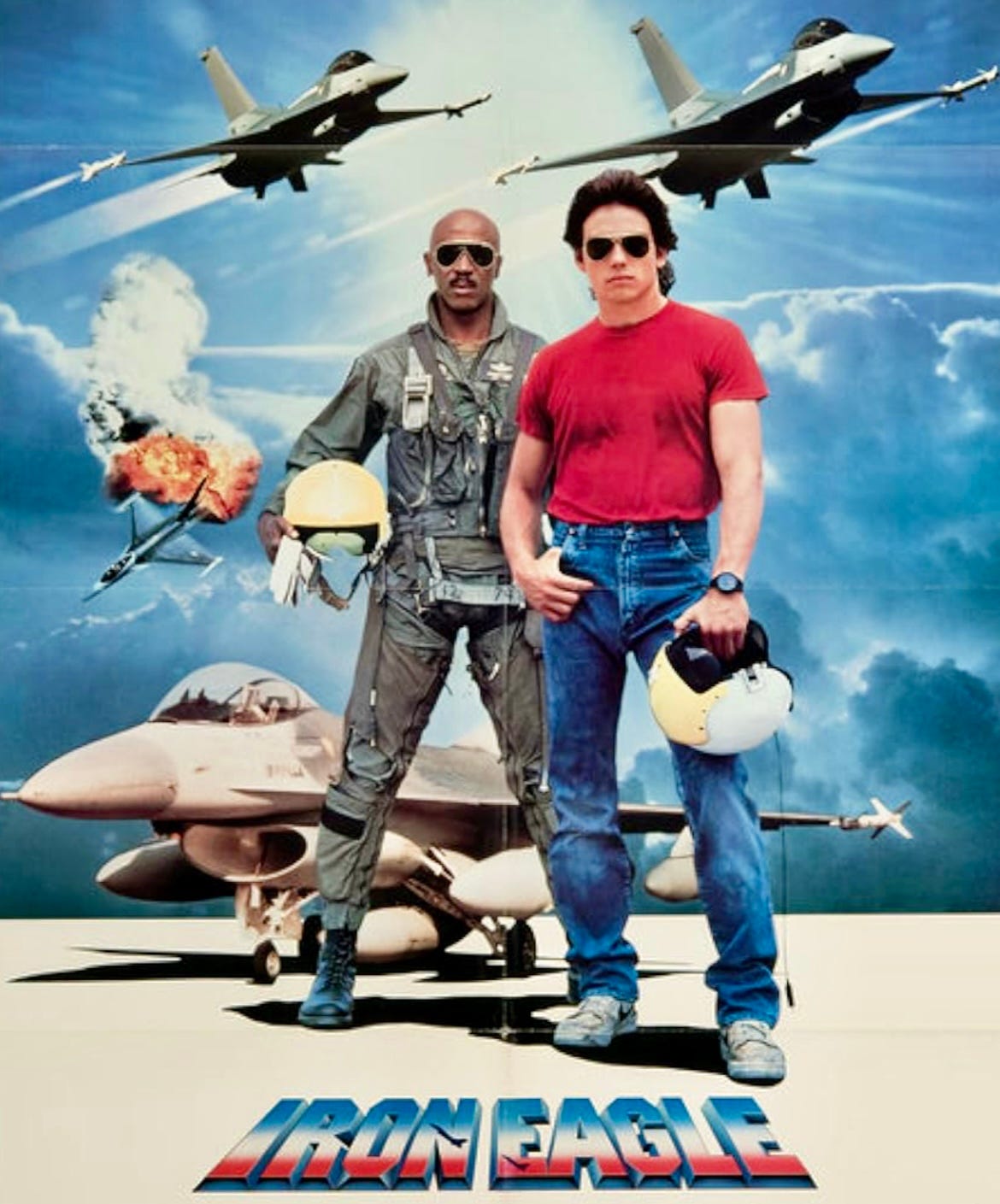
GenX grew up on gobs of content like that in the Reagan era. It was normal. The real messages behind Bruce Springsteen’s “Born in the USA,” John Mellencamp’s “Pink Houses,” and Jackson Browne’s “Made for America” largely went over our heads. To us, they were just more badass, rah-rah America fodder: “America,” “Rambo,” “Kids in America,” “Top Gun,” “Living in America,” “Rocky IV,” Alex P. Keaton on “Family Ties,” the LA Olympics. It was an excessively patriotic time, and GenX freely drank it all in. That’s not to suggest that all GenXers became conservative Republicans as a result. Naturally, there was a counterculture, and my hardcore punk husband could tell you all about it. But the mainstream was pure, red-blooded ‘Murica.
The 1990s, God love them, were nowhere near as conspicuously patriotic as the Reagan years, and by the time high school classrooms began filling up with the leading edge of the Millennial generation, the zeitgeist had changed markedly. The late ‘90s were peak unadulterated American liberalism. Hip hop was ascendant. Ellen DeGeneres was out and proud. Bill Clinton survived an impeachment. Raging against the machine was cool again. Times were changing.
Then 9/11 happened.
For those of us in young adulthood who’d had no World War II, no Korea, and no Vietnam, it became one of the defining moments of our generation. Like muscle memory, all that patriotism came roaring back with a vengeance. American flags were everywhere. You couldn’t go more than a few days without hearing Lee Greenwood’s “God Bless the USA” or some rendition of “God Bless America.” My husband, 2-year-old daughter, and I moved into our house three days before 9/11, and when choosing the color schemes and decor for our new home, Americana easily won the day.
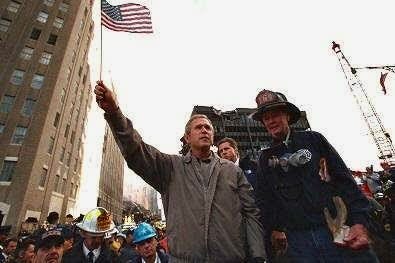
When George W. Bush visited Ground Zero in Manhattan on September 14, 2001, and said, “I can hear you. The rest of the world hears you. And the people who knocked these buildings down will hear all of us soon,” I got goosebumps. Tears filled my eyes. Yes, I was proud to be an American. And screw anybody who would mess with us.
Exactly the Same and Completely Different
Politically, I always seem to be on the unpopular side. I was a committed Republican when John McCain was dismissed as “Bush’s third term,” and Mitt Romney was mocked over “binders full of women” and his supposedly outdated view of Russia (lol). And I’m Democrat-ish now that the party is all but tanked, and folks are leaving in droves. Make of that what you will.
But I haven’t changed that much on the basics. During the 2004 presidential campaign, when I was in my early 30s, I had a wide-ranging political conversation with my progressive, Baby Boomer aunt. She is and always has been pro-poor and working class, pro-union, pro-choice, pro-gun control, pro-single payer healthcare, you name it. She’s a fundamentally decent person, and if you talk politics with her, she brings receipts.
We discussed immigration. She contended that “the rich” want undocumented immigrants here for cheap labor, because they don’t want to pay Americans a living wage. I argued that the American Dream is open to all. We disagreed about the global role of the U.S. I made the case for a broad, pro-democracy foreign policy, while she countered that it’s not our job to police the world. She was also against free trade (I was for it) and deeply suspicious of the FBI and CIA (I wasn’t).
Again, she was a bleeding-heart liberal, and I was a conservative Republican at the time. Today, my view on these issues remains virtually unchanged—with the possible exception of my trust in a “deep state” led by the likes of Kash Patel and Tulsi Gabbard. While she’s still very much a lefty, my aunt and I now agree more often than not on these issues.
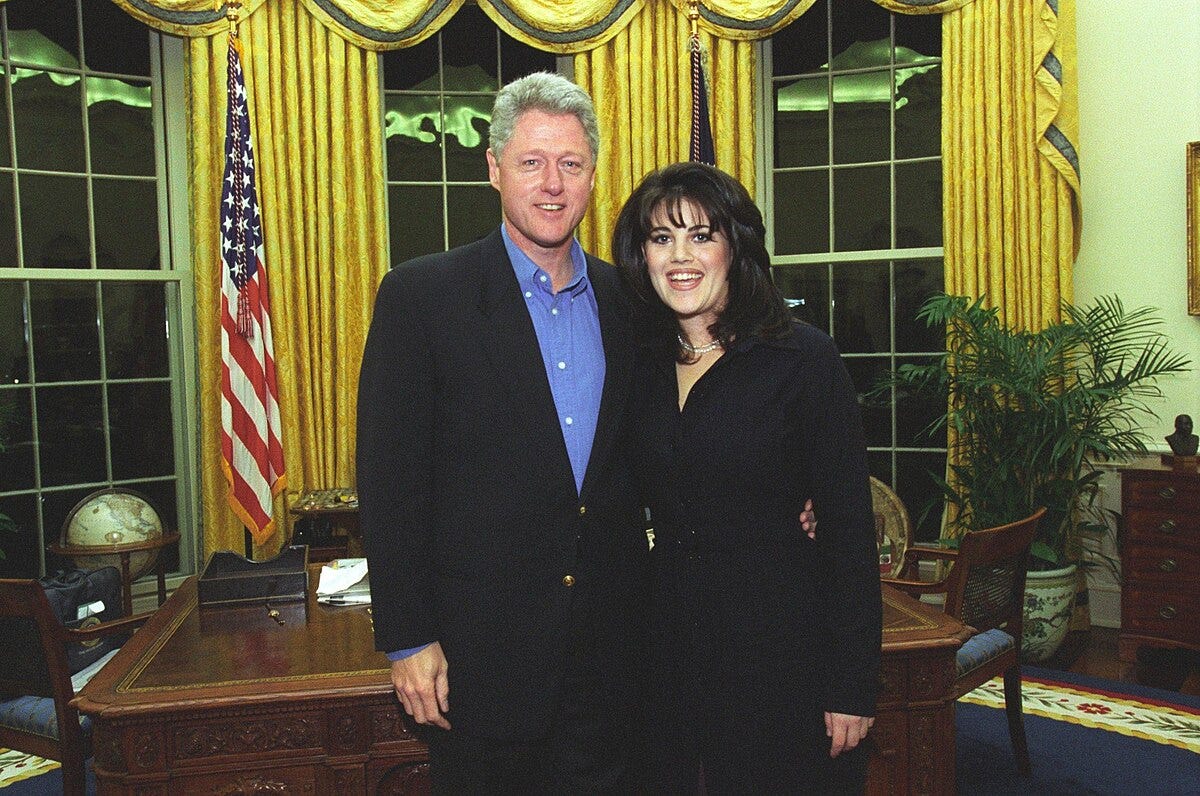
Back then, she also defended the heck out of Bill Clinton, which I could never understand. I wasn’t against Clinton because he was a Democrat; I was against him because of the way he behaved with a female subordinate half his age. Whom he threw under the bus. And then allowed his wife to lie for him publicly. In my opinion, then and now, mine was the pro-woman position. It would be considered the “woke” one now. Ironically enough, the MAGA position, if consistently applied (lol), would be that Clinton is an alpha male who deserves emulation, and Hillary was right to submit to her husband’s authority. And besides, we didn’t vote for a pastor—right, MAGA?
It’s funny how things change.
And change they do. Because while much is the same, so much is different too. Back in 2008, I was among those conservatives (read: all of them) who feared a Barack Obama administration. Fox News had convinced me he was a “radical,” and while I wasn’t one of the cretins who took issue with his race, I did worry a lot about his policies. In 2009, my husband and I even attended a Tea Party rally. The speakers—a mix of Republicans, populist Democrats, and independents—were actually quite interesting. But some of the vendors were…quite questionable. It was clear to us then which way the Tea Party was going. We never went back.
We did, however, continue watching Fox News pretty regularly—specifically “The Five,” because I liked Dana Perino (though I’m proud to say I could never stand Kim Guilfoyle). Over time, something interesting happened. More and more, I noticed I appreciated the token liberal on the panel—Juan Williams, Julie Roginsky, and others—even when I didn’t agree with them. They were serious when the others were juvenile. They brought data and facts to the table when the others brought only feelings. They seemed to think about others beyond themselves. Add to that the circus the GOP was becoming (birtherism, tan suit hysteria, Ted Cruz, the Freedom Caucus, etc.), and it made me start rethinking things. Hard.
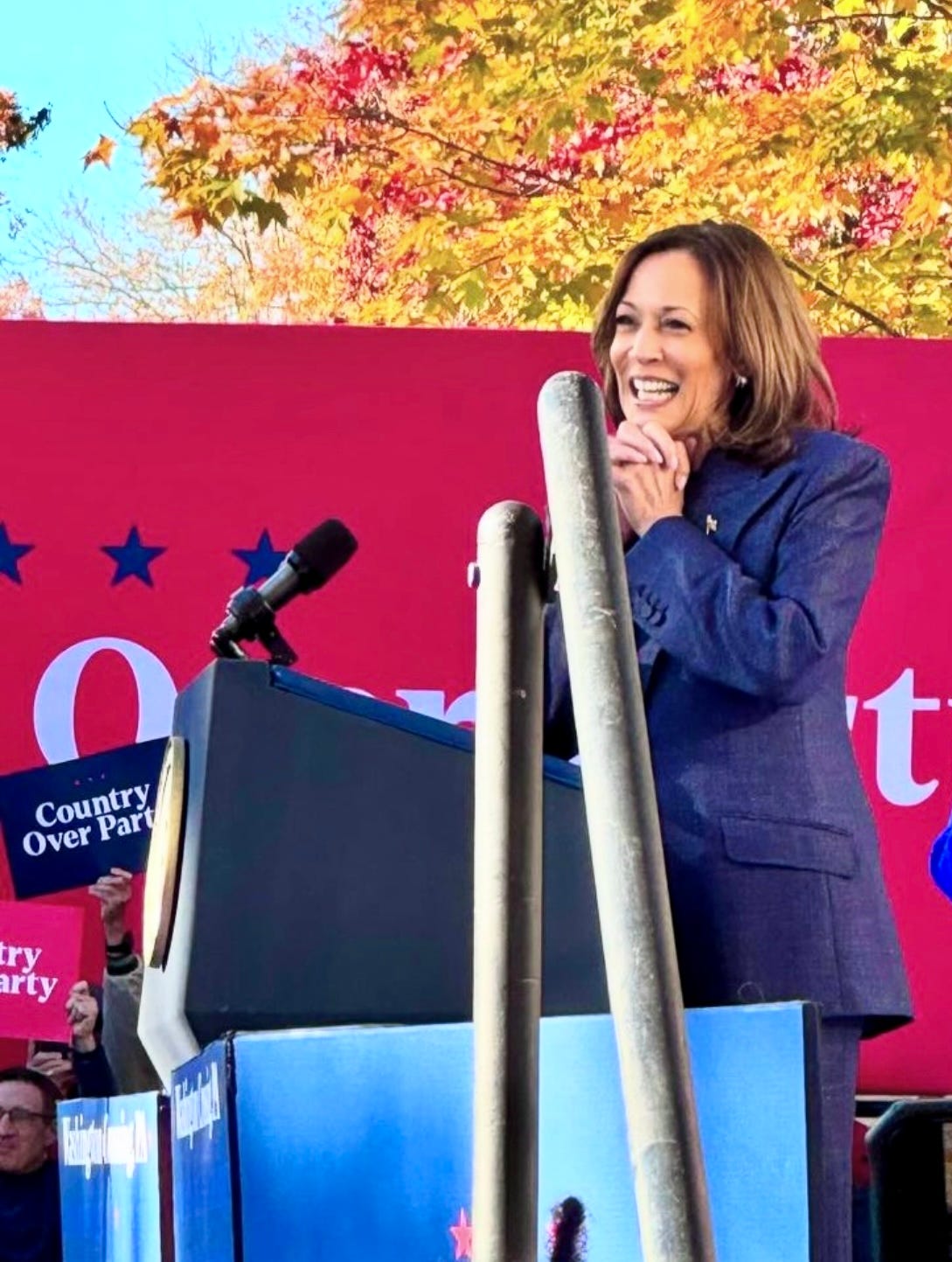
Donald Trump was my turning point. The final straw. If this was where the party was headed, they could count me out. I officially left in May 2016. As time has passed, I frequently wonder what happened to the Republican Party I thought I knew. If there’s anything I’m thankful for in the Trump era, it’s that the rise of Trump forced me to take a closer look at how much it had changed—and how much I did, too. I think that’s true for many of us NeverTrumpers. In 2024, my husband and I attended a Kamala Harris rally at the same site as the Tea Party rally some 15 years earlier. Talk about full circle. Redemption is real.
Pickles is starting to settle in since her wacky day on September 10, and hopefully the country is beginning to settle down, too—until the next big, breaking news story, that is. I know a lot of Americans are genuinely grieving the loss of Charlie Kirk. I may not feel their anguish, but, like them, I wish this tragic shooting never occurred. I deplore violence, no matter where it originates, and have sympathy for his family, as I do for the loved ones of all victims of violence. I also worry deeply about the country, which grows more polarized by the day.
But mostly, I feel bad for Charlie, just 31 years old, who was denied the opportunity to change, as so often happens with time.
My political journey has made working with clients who’ve followed a similar path much easier. More on that next time. Thank you so much for reading!
I appreciate your description of your journey. I was always a Democrat. My grandfather was a dedicated union man in a state and time were not popular. My father was a decorated veteran of the Pacific front in WW2 and Korea. He hated McArther.
I liked Ike but loved JFK. I respected LBJ and his support of Civil Rights despite Vietnam.
When I was old enough to vote I faced Nixon and his crowd. I was not impressed at all with Reagan (my wife was from California).
Bush 1 was a real veteran and spoke kindly of “a thousand points of light.” But I was wary of his inherited position, and his son was worse. I distrust nepotism. Which is why I was lukewarm about Hillary.
I absolutely loved Obama and respected Biden. I thought Kamala had exciting potential.
But for me, it was policy, more than personalities that moved me. FDR’s New Deal and his Four Freedoms appealed to the values taught by my religion. So did Truman’s Fair Deal. As a child raised on army bases, I grew up in integrated communities, and believed in the Great Society and civil rights.
All these helped make America great - more than military might, economic or cultural dominance.
Trump, MAGA, and the GOP are against everything I believe in.
Imagine the same event, the same violence, the same loss of life, but with one crucial variable reversed.
Imagine a well known progressive figure is assassinated in public. The shooter is a lone actor. The facts are incomplete. The investigation is ongoing.
Now imagine the response unfolds this way:
Cable news anchors on the right express solemn condolences for the family. Elected Republicans condemn the violence clearly and without qualifiers. Social media figures with large followings resist the urge to speculate, resist the urge to mythologize, resist the urge to turn the dead into a symbol. No one calls the victim a saint of the movement. No one frames the killing as proof that the other side is evil incarnate. No one demands loyalty tests. No one implies that criticism of the victim before their death somehow invited the violence.
Instead, the dominant message is restraint. Grief without weaponization. Accountability without vengeance. A shared insistence that political disagreement never licenses murder.
Now flip it back.
The author’s claim is not that martyrdom is inevitable. The claim is that martyrdom is selective, that some deaths are metabolized into political fuel while others are treated as tragic but isolated. The thought experiment asks whether the reactions we witnessed were inevitable expressions of grief or choices shaped by a political culture that thrives on siege narratives.
That’s the real question underneath the rhetoric.